
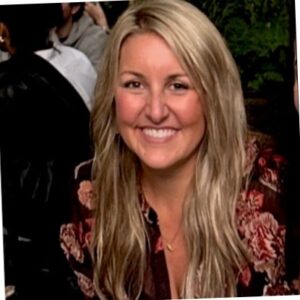
There is something about a medical professional looking to improve the lives of their patients, even more so when those patients are seeking treatment as a residual effect of their military service to their country.
Sometimes, that professional is found inside of a Department of Veterans Affairs facility, and sometimes the network has to be expanded to unveil the right treatment for the veteran.
Dr. Brittny Antoine and her practice, Shift Acupuncture and Wellness in the heart of Acadiana, are a part of the VA’s Community Care Network to help fill in those gaps of care, but also, “because the veterans need the help, and they’re really, really grateful.”

Dr. Brittny Antoine and her practice Shift Acupuncture and Wellness are a part of the VA’s Community Care Network to help fill in those gaps in VA care.
Antoine is a pain management specialist practicing acupuncture and Chinese medicine in Lafayette, Louisiana. She said she is fascinated with the mind-body connection and explores it through Chinese Medicine as she spreads the word about the efficacy of acupuncture to her local community as a low-cost solution to the opioid epidemic in America and the high occurrence of chronic pain.
The Chronic Pain Rehabilitation Program at the James A. Haley Veterans Hospital in Tampa, Florida, is a nationally known center for chronic pain research, treatment, and education. Not every veteran can get to Tampa for treatment, and not every VA is equipped to treat every ailment.
One study conducted by VA Palo Alto researchers found that non-drug therapies may help service members with chronic pain avoid adverse outcomes later in life. The Journal of General Internal Medicine published that veterans who received acupuncture, biofeedback, or other non-drug therapies, like chiropractic care, during their service had a significantly lower risk of new-onset alcohol or drug use disorders; poisoning with opioids, barbiturates, or sedatives; and suicidal thoughts and attempts while under VA care.
With her clientele being approximately 60% veteran, Antoine is one of many doctors working to fill a gap in the care service members receive through the Veteran Affairs care post-separation from military service.
Why is Community Care Necessary?
The Community Care Network is the VA’s direct link with community providers, like Antoine, to provide veterans access to timely, high-quality care when there may be a gap. Through CCN, the VA can purchase care for veterans in the community.
“I always had a really great time getting to know all my patients from all walks of life,” Antoine said. “I think it’s really awesome that the VA provides that option to the veterans.”
Veterans must meet at least one of the six eligibility criteria for community care, spokesperson for the VA Gary Kunich told Veteran.com. That criteria is based on the veterans’ individual healthcare needs and circumstances and includes:
- A veteran needs a service that the VA doesn’t provide at any VA health facility, or
- The veteran lives in a state or territory that doesn’t have a full-service VA health facility, or
- The veteran and their VA provider agree that getting care from an in-network community provider is in their best medical interest, or
- The VA can’t provide the service the veteran needs in a way that meets the VA’s quality standards, or
- The veteran qualified under the 40-mile distance requirement as of June 6, 2018, and they live in Alaska, Montana, North Dakota, South Dakota, Wyoming, or another location that would still make them eligible under these requirements, or
- The VA can’t provide the care the veteran needs within their standards for drive and wait times
Additionally, there are designated access standards, including:
- For primary care, mental health, and extended outpatient care: 30-minute average drive time or 20-day wait time
- For specialty care: 60-minute average drive time or 28-day wait time
Kunich said the VA’s goal is to ensure a sufficient number of community providers are available in its network to meet the diverse and growing demand for various types of care.
Challenging Tradition
Antoine graduated Howard University in Washington, D.C., with her bachelor’s degree and went on to earn her master’s and doctoral degrees from the Pacific College of Oriental Medicine in San Diego, California.
She first challenged Western medicine when she sought care for a strange medical issue while studying medicine as an undergrad.
“Something that really struck me was that they never touched me at any point,” she said.
Antoine’s doctors put her on medication which she continuously refilled, but when her issue did not subside the doctor’s next suggestion was surgery.
“I remember I asked the surgeon, ‘So, if you don’t really know why this is happening, let’s say you go and cut it out, wouldn’t it probably just grow back, because you don’t know where this is coming from?’
Her doctor told her, “‘Yeah. Well, that’s usually what happens.’”
That didn’t sit well with Antonine, “‘So, you’re going to maim me, and it probably won’t even be a resolution?’”
The conversation was enough for Antoine to begin researching alternative treatments on her own.
Systematically, she tried acupuncture, herbs, water fasting and lymphatic drainage. Without surgery, she resolved her “strange” condition.
She said she believes that Western medicine has done great things, but that there is room to fill in the gaps.
That gap is the same way Community Care – the means by which Antoine sees veterans at her practice – is meant to fill in the voids where Veteran Affairs care can’t for service members.
Providing a Different Standard of Care
After earning her credentials, Antoine worked under a doctor who ran a practice in Lake Charles, Dr. Donald Snow. As a retired service member with 21 years in military medicine, Snow took veteran patients himself at his practice, CoRelief Center.
Antoine was worried about the skepticism around non-Western medicine, especially as she saw so many acupuncture therapy locations struggle in California. The veteran doctor she worked under said the reason why he went into acupuncture was because he came from the Western medicine side of the military and admitted he believed he never helped anybody.
“He said he was frustrated, because, by and large, if he was told to look at the statistics of what he was made to do, he said, ‘I just don’t really see us really helping,’” Antoine recalled her mentor saying. ‘“So I was wondering, what can help them?’”
As a U.S. Army hospital corpsman, Snow specialized in epidemiology and infectious diseases and served across Central and South America where he treated indigenous people. He was later assigned to the Multinational Force in Egypt where he helped the U.S. Navy Medical Research Unit.
“He’s had a lot of interesting assignments and been exposed to a lot of things,” Antoine said of her mentor. “He already knew that acupuncture was an effective means of helping people with the problems he was [treating]. And I’m sure it was with the pain that he was dealing with.”
Snow retired and earned a master’s degree in public health and began to focus on the ancient Chinese practice of acupuncture. He enrolled at the Pacific College of Oriental Medicine, which became the first in the nation to derive a doctoral program in acupuncture and Oriental medicine. He earned his master’s degree, then his doctoral degree, graduating in 2003. He opened his first CoRelief location in 2007.
Through his practice, the Louisiana native wanted to focus not on pain management, but on eliminating pain. According to Snow and his practice, the U.S. department of Veteran Affairs reported as of October 2018 that CoRelief Center patients saw a 85% success rate in eliminating pain in veteran patients.
To take on veteran patients within the Community Care Network, providers must be fully credentialed to provide care in accordance with nationally recognized credentialing standards set forth by the National Committee for Quality Assurance or the Utilization Review Accreditation Commission, Kunich said. The process to join the network as a provider takes approximately 90 days.
“While VA continues efforts to streamline all aspects of community care, VA is especially focused on making it easier to schedule community care appointments and improve care coordination between VA and community providers,” Kunich said.
Requesting a Community Care Doctor
The VA is working to expand the Community Care Network in rural and underserved areas, Kunich told Veteran.com.
“This is accomplished by working with Third Party Administrators to identify and address any network gaps, which includes outreach and reviews aimed at recruiting additional providers,” he said.
That said, veterans can request a specific community provider as long as the provider is a part of Community Care Network and is fully approved to provide care to veterans. Should the veteran have no preference, then they will be assigned a community provider if one is available for the care they need.
“Part of being a good doctor is knowing other things that exist,” Antoine said. “I think we should all educate ourselves about different types of therapies that are good for different things, and get to know other providers in the community, and have a referral network. That’s the mark of a good doctor.”
-
Noelle Wiehe is an award-winning journalist from Cincinnati, Ohio. She has covered several Army units and deployed as an active-duty Army soldier, in support of Operation Inherent Resolve to Kuwait. As a Military Veterans in Journalism fellow, she reported on every branch of the military as well as the first responder community for Coffee or Die Magazine. Today, she continues to serve through her work with veteran nonprofits and as a military beat freelance writer. She resides in Lafayette, Louisiana.